




Farmers Seek Innovation for Profitability as Industry Challenges Grow
June 15, 2026
With rising costs, increasing compliance requirements, environmental regulations, traceability demands, labour pressures and growing administrative workloads, UK farmers are facing more challenges than ever before.
Across the industry, farmers are being asked to produce more, document more and adapt more, often while operating on increasingly tight margins.
It is perhaps no surprise then that many of the ideas already submitted to the 2026 Blaney Innovator Programme focus on one common objective: finding smarter ways to improve efficiency, reduce waste and protect profitability.
As applications enter their final weeks, the submissions received so far offer an interesting insight into the real-world challenges facing modern farming businesses and the practical solutions farmers believe could help address them.
Innovation Starts With Real Farm Problems
At Blaney Group, innovation has always been driven by one simple principle: listen to the people doing the job.
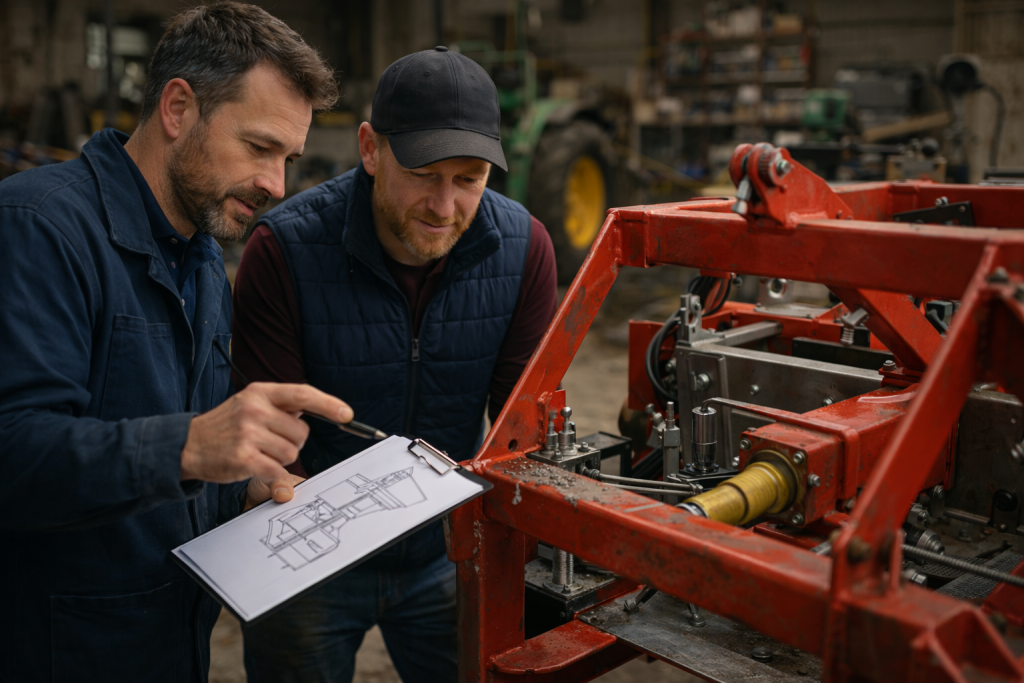
While machinery manufacturers play an important role in developing new products, some of the best ideas in agriculture start much closer to the ground. They come from farmers, contractors and operators who face challenges every day and can see opportunities for improvement that others might miss.
That thinking is what led to the creation of the Blaney Innovator Programme.
The programme was established to provide a direct route for farmers and industry professionals to share ideas, frustrations and opportunities that could potentially become real-world solutions through engineering support and investment.
As Sean Blaney, founder and chief engineer of Blaney Group, explains:
“Farming has never stood still, but the pressures on businesses today are greater than ever.
Farmers are dealing with rising costs, increasing regulation, environmental requirements, traceability demands, labour challenges and growing amounts of paperwork, not to mention the weather volatility in recent years, all while trying to run a productive business that returns a profit for their risk and hard work.
The reality is that if we don’t continue to innovate and find better ways of doing things, it becomes increasingly difficult to remain competitive or even turn a profit that pays a fair wage for the farmer.”
What Themes Are Emerging?
While every Innovator submission is different, several common themes are already beginning to emerge.
Many ideas focus on:
- Reducing machinery downtime
- Improving labour efficiency
- Streamlining livestock handling
- Reducing waste
- Improving recycling and resource recovery
- Making routine tasks quicker and safer
- Lowering operating costs
Among the concepts submitted so far are ideas aimed at improving the handling and recycling of waste materials to create additional value, servicing solutions designed to reduce costly machinery downtime and practical improvements to livestock handling and feeding systems.
Although the concepts vary, they all share a common goal: helping farmers achieve more with the resources available to them.
Why Simple Ideas Often Have the Biggest Impact
One of the most interesting aspects of the programme is that many of the ideas submitted are not highly complex inventions.
Instead, they are practical improvements to existing systems and processes.
These are often the types of ideas that farmers recognise could make a significant difference to their daily operations but do not have the time, resources or engineering support to develop further themselves.
Sean believes these ideas are often where some of the greatest opportunities exist.
“Often it’s the simple improvements that the farmer has no way to develop further in terms of design, testing or proving out themselves, but can make the biggest difference to their everyday tasks.
Farmers are incredibly innovative people, and many of the best ideas come from practical experience rather than a drawing board.”
A Long-Term Commitment to Customer-Led Innovation
The Innovator Programme is not a standalone initiative.
It reflects the same customer-led approach that has helped shape products across both the Blaney Agri and Quad-X ranges for decades.
Many of Blaney’s products began with a challenge identified by a farmer, contractor or customer looking for a better way of doing something.
That direct connection between users and engineers continues to play an important role in how new products and improvements are developed.
Several concepts submitted through the programme last year are already being explored further, demonstrating the value of creating a route for practical ideas to progress beyond the farm gate.
“Every product we’ve developed over the years has started with a problem that we have helped farmers solve,” says Sean.
“Whether it’s feeding livestock more efficiently, handling materials more effectively or reducing time spent on routine jobs, innovation has always been about helping farmers improve productivity.
The Innovator Programme is simply an extension of that philosophy that is so easy for anyone to access. We’re looking to help make practical concepts and ideas a reality that can then help move the industry forward.”
Could Your Idea Be Next?
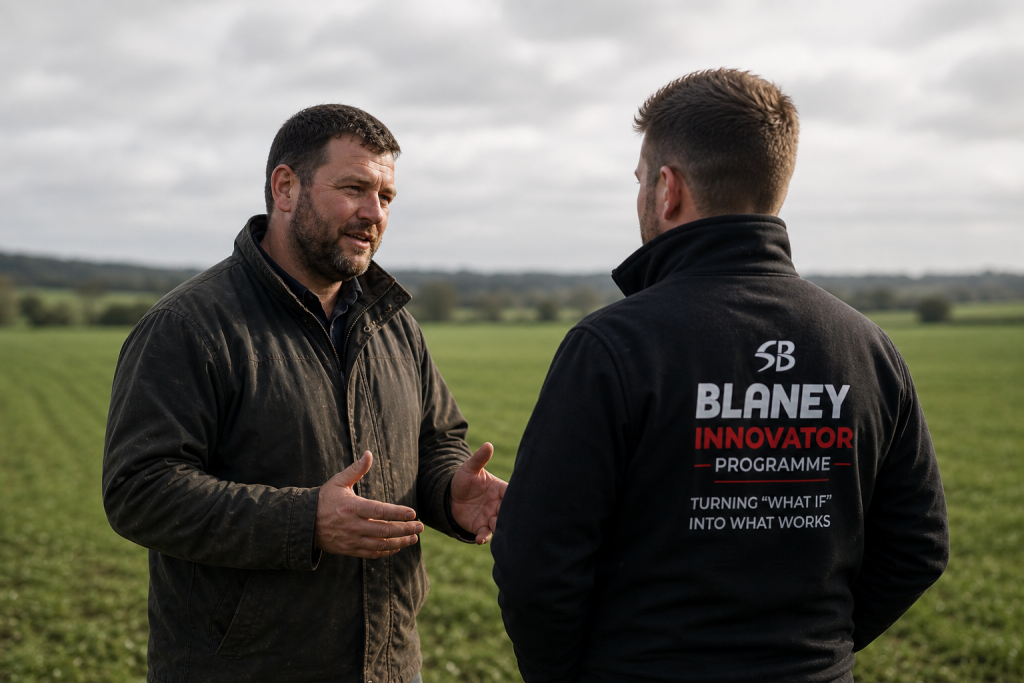
You don’t need engineering drawings.
You don’t need a prototype.
You don’t even need a finished solution.
If there is a task on your farm that could be done better, faster, safer or more efficiently, that is exactly the type of conversation the Blaney Innovator Programme was created for.
Successful concepts may receive engineering support and investment of up to £50,000 to help transform a simple idea into a practical working solution.
Applications for the 2026 Blaney Innovator Programme close on 30 June.
Submit Your Idea Today
Visit: www.blaneyagri.com/innovator
Turning “What If” into “What Works”.